Cross-border e-commerce fulfillment: what scaling brands need for speed, multichannel and peak periods
Cross-border e-commerce fulfillment lets brands sell and ship internationally without sacrificing speed, accuracy or margin. The four most important aspects are customs and duty transparency, real-time multichannel inventory data, a multi-carrier setup and capacity planning that's ready for peak periods.
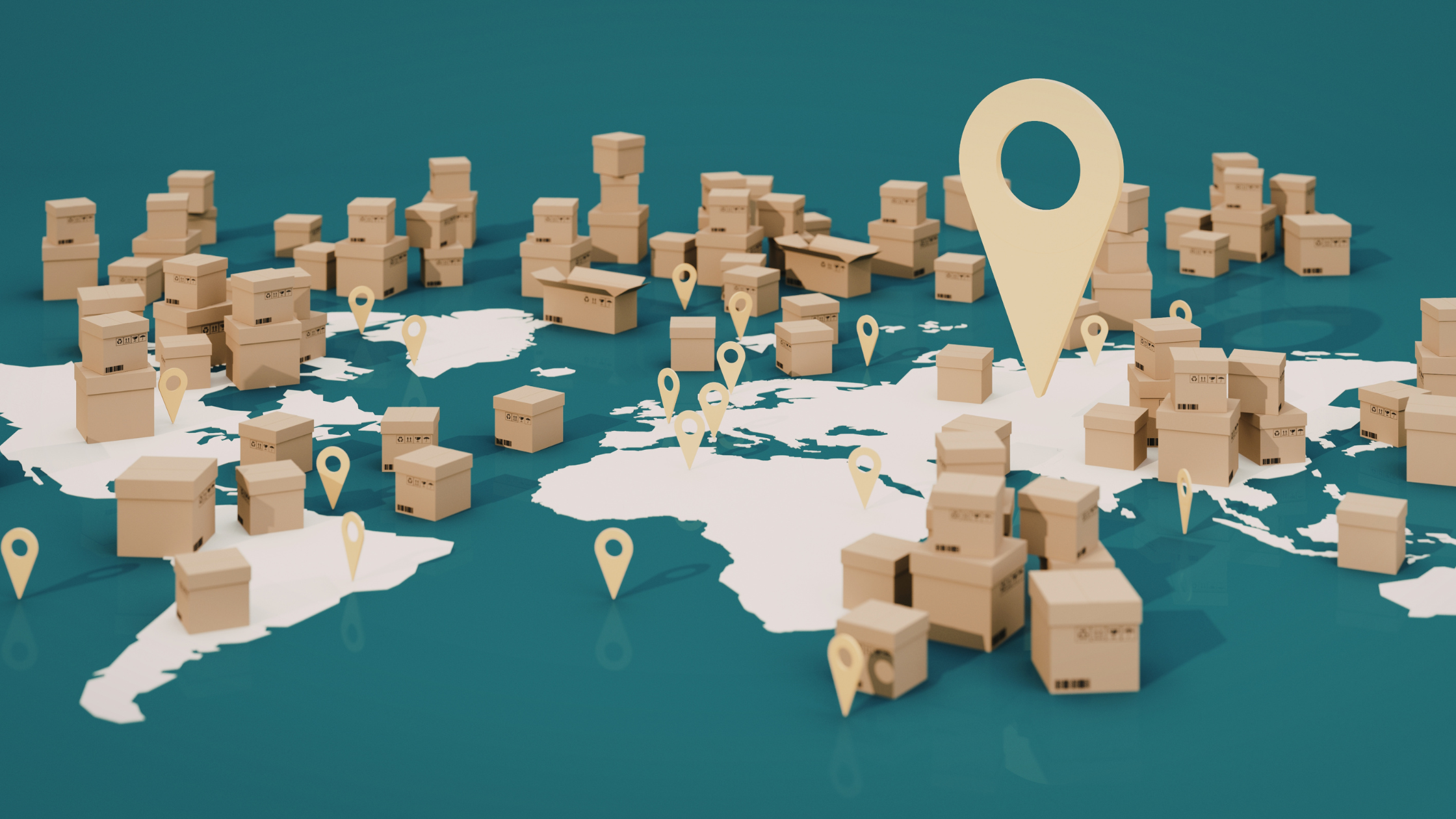
Cross-border e-commerce fulfillment is no longer a nice-to-have but a decisive factor in international growth. Brands selling into European markets face higher customer expectations, tighter margins and more complex logistics than ever. The setup that worked at 500 orders a month buckles at 50,000.
This guide covers what scaling brands need across four areas: cross-border compliance, multichannel integration, fast delivery and peak season management. Each chapter explains where the biggest operational risks lie and how a scalable e-commerce-fulfilmentopzet er in 2026 uitziet.
Why cross-border fulfillment is now a growth engine
Cross-border shopping keeps growing faster than domestic. The global cross-border e-commerce market is expected to reach 2.0 trillion dollars by 2034, growing 15.44% a year from 551 billion dollars in 2025 (Source: Precedence Research Cross-Border E-commerce Forecast). Brands that set up cross-border operations early capture market share before competitors can react.
Customer expectations set the minimum operational standard. 81% of online shoppers worldwide abandon their basket if their preferred delivery option is missing, according to a 2025 DHL study of 24,000 shoppers across 24 markets (Source: DHL E-Commerce Trends Report 2025). Speed and choice in delivery options are direct revenue drivers, not operational extras.
What 'scalable fulfillment' actually means
Scalable order fulfillment is the ability to absorb variable order volumes, multiple sales channels and international shipping regions without sacrificing quality or speed. Brands that aren't flexible enough hit their capacity limits fast. The result: delayed deliveries, higher return rates and a damaged brand.
Five operational elements separate scalable setups from fragile ones:
- Demand forecasting and planning: accurate volume forecasting for stable operations
- Hybrid warehouse setup: regional proximity combined with flexibility at peak demand
- Carrier: minimal delivery risk through dynamic carrier routing
- Procesautomatisering: fewer manual errors, faster response times
- Compliancebeheer: compliance with international shipping and customs rules
What you need to know about trading cross-border: customs, compliance and duty transparency
Cross-border fulfillment covers the whole international process, from customs clearance to transparent pricing at checkout. The challenge is making that complexity invisible to the customer.
Customs compliance and automation
Compliance means legally correct and efficient customs handling in every destination country. Digital pre-clearance and automated documentation cut turnaround time. Modern systems generate customs data automatically, forward it to the authorities and prevent border delays that hold deliveries up for days.
Clear display of duties and taxes at checkout
Clear information about taxes and charges at checkout is the foundation of cross-border conversion. If customers only discover extra costs after placing the order, abandonment rates go through the roof.
- Without duty transparency: unexpected charges on arrival, high refusal and abandonment rates
- With duty transparency: clarity at checkout, higher conversion, fewer returns and disputes
Cross-border returns management
International returns involve logistics, customs handling on the way back and customer communication across borders. Local return addresses in each market, automatic label generation and consolidation centers speed the returns process up. A integrated tracking and returns portal handles this end to end, with SendNet customers reporting up to 70% fewer support requests about order status and up to 32% more repeat purchases.
Multichannel fulfillment: one stock pool, every channel
Multichannel fulfillment connects order and inventory management from every sales channel — from Shopify to Amazon and TikTok Shop — to a single central infrastructure. This setup stops any one channel overselling and keeps stock figures consistent everywhere.
Real-time inventory sync
Real-time inventory sync updates stock levels across every connected channel the moment an order comes in. Fewer wrong items are picked and less is oversold, which improves stock utilisation. Brands using real-time sync consistently report fewer support requests and higher customer satisfaction.
Marketplace and social commerce integrations
Thanks to built-in integrations with Shopify, Amazon, WooCommerce, eBay, TikTok Shop and Instagram removes manual data transfer between sales channels and the fulfillment backend. The right integration layer widens your reach, shortens processing time and keeps sales processes consistent across every channel. A integrated order and inventory management platform gives brands a single central view of inventory, orders and shipments in real time.
Fast delivery: multi-carrier and dynamic routing
Speed is the norm now, whether that's same-day or next-day delivery. Buyers expect accurate tracking and guaranteed delivery windows. Fulfillment partners have to combine flexible networks, transparent systems and adaptable shipping logic.
Multi-carrier and dynamic routing
A Carrier uses several carriers to avoid bottlenecks. Dynamic routing picks the best carrier for each order in real time, based on price, delivery window and destination region. The pan-Europese fulfilmentnetwerk from SendNet covers more than 90% of Europe with a 1-to-2-day delivery time, and gives full visibility into carrier routing and performance.
Last-mile strategies and same-day delivery options
The last mile determines both the customer experience and the cost. Micro-fulfillment centers, urban warehouses and flexible delivery models such as click & collect or express zones make same-day delivery possible, while route optimisation and low-emission transport keep it sustainable.
Absorbing seasonal peaks without being overwhelmed
Black Friday, Cyber Monday and the Christmas campaigns push parcel volumes to record highs. Shopify merchants alone took 14.6 billion dollars in revenue during BFCM 2025 (Source: Shopify BFCM 2025 data), with daily parcel volumes across the sector running 3 to 5 times higher than normal. Brands that don't prepare for this peak risk system failures and exhausted teams.
Capacity planning and workforce flexibility
Peak capacity planning means getting ahead of demand, locking in warehouse space and staffing up early. Temporary labour pools, flexible shift models and digital forecasting keep delivery performance stable without costs spiralling. Proactive capacity planning based on real-time order data absorbs peaks without customers noticing a thing.
Automation and data-driven operations
Automation in distribution centers, from robot-driven picking and packing through to algorithmic carrier routing, drives maximum efficiency during peak periods. Real-time dashboards show order status, returns and performance live, so brands can steer proactively rather than reacting once a problem has already occurred.
The technology foundation for scalable order fulfillment
Scalable fulfillment networks depend on interconnected IT systems, real-time data and integrated workflows. Siloed systems cost brands control, speed and precision in day-to-day operations.
System integration with store and ERP systems
System integration means data from your store and ERP flows straight into the fulfillment platform. Native integrations with Shopify, WooCommerce and leading ERP systems remove manual data entry and keep your data consistent, from order to delivery. A cross-border fulfillment platform such as SendNet makes this possible through a central cloud cockpit with automatic sync and transparent workflows.
Automated workflows and reporting dashboards
A reporting dashboard brings key metrics — delivery speed, pick accuracy and return rate — together in a single real-time view. Automated workflows for order allocation and shipping notifications reduce errors and take pressure off operations teams. Warehouse management systems (WMS) feed shop-floor data back into the platform.
Sustainability as part of a modern fulfillment strategy
Sustainable logistics is no longer just a marketing angle. Consumers and regulators now treat it as a baseline requirement. Eco-friendly packaging, CO₂-optimised routes and reusable logistics materials cut emissions and strengthen your brand. Brands that put environmental responsibility into practice stand out and lower their costs over the long term.
KPIs that show order fulfillment performance
Set measurable criteria when evaluating fulfillment partners. These are the four most important metrics:
- On-time delivery (OTD): the share of deliveries arriving on or before the promised date. Target: more than 98%.
- Pick accuracy: how correctly the picking process runs. Target: more than 99.7%.
- Retourpercentage: het percentage orders that get sent back. This depends on the category, but aim for the lowest achievable rate.
- Dashboard visibility: real-time visibility across the whole fulfillment process. Target: 100% of order statuses visible.
Also track how many orders are picked correctly first time, carrier performance per lane and cost per shipment. These diagnostic metrics surface bottlenecks before they show up in customer experience.
What a modern fulfillment partner
A scalable cross-border fulfillment partner has to score on four fronts: a pan-European network for local-speed delivery, a genuine multi-carrier setup for resilience, sustainable operations and a tech stack that gives brands operational control rather than taking it away.
SendNet supports more than 500 European DTC brands with 1-to-2-day delivery across more than 90% of Europe, up to 70% fewer support requests about order status and up to 32% higher repeat purchase rates, all through a cloud cockpit with full operational transparency.
Finally, an operations platform that matches your ambitions.
Discover how SendNet handles cross-border fulfillment for scaling European DTC brands.
Frequently asked questions about cross-border e-commerce fulfillment
How long does it take to switch fulfillment partners?
With an experienced onboarding team and out-of-the-box integrations for Shopify, WooCommerce and Amazon, moving to a new fulfillment partner takes only 5 days to 2 weeks. Inventory migration, system integration and operational ramp-up happen in parallel, so brands can keep shipping throughout the switch.
From what order volume does outsourcing fulfillment make sense?
Outsourcing to a 3PL pays off from around 300 orders a month. Above 1,000 orders a month, a specialist partner almost always outperforms your own team on cost, accuracy and delivery speed, especially for brands expanding into several European markets.
How do fulfillment partners handle seasonal peaks?
Fulfillment partners absorb demand peaks through flexible labour pools, pre-booked warehouse capacity and real-time demand forecasting. Shopify merchants alone took $14.6 billion in revenue during BFCM 2025, so brands rely on partners that can scale operations 3 to 5 times above normal daily volumes without service suffering.
What matters most in cross-border and multichannel fulfillment?
The four essentials are a pan-European warehouse network for fast local delivery, real-time inventory sync across every sales channel, customs-friendly shipping with transparent import duties, and a multi-carrier setup. Without these four, cross-border growth quickly runs into operational obstacles.
How do fulfillment companies make delivery and returns fast?
Fast delivery comes from a multi-carrier network, dynamic routing based on cost and speed, and regional micro-fulfillment centers. Returns scale through local return addresses in each country, automated label generation and consolidation hubs that bundle returns to lower per-unit processing costs.