HTS code: a guide for e-commerce merchants
What is an HTS code? HTS stands for Harmonized Tariff Schedule, a system introduced in the United States in 1989. HTS codes form a hierarchical numerical structure used to describe goods for customs purposes, quotas and statistics. The HTS is based on the Harmonized System (HS).
Uitleg over HTS-codes
To facilitate international trade, most countries use a customs classification system to make sure shipments cross the border without problems. In the US that is the HTS-codesysteem used to determine the customs duties payable on import. The codes are designed to identify goods entering the US quickly, preventing delays and keeping everything moving.
What is an HTS code and what are HTS codes used for?
HTS stands for Harmonized Tariff Schedule, a system introduced in the United States in 1989. HTS codes form a hierarchical numerical structure used to describe goods for customs purposes, quotas and statistics. The HTS is based on the Geharmoniseerd Systeem (HS).
HTS codes directly affect:
- Import tariffs
- Anti-dumping measures
- Reductions in customs tariffs
- Extra taken
- Government agency requirements
How does the HTS code work?
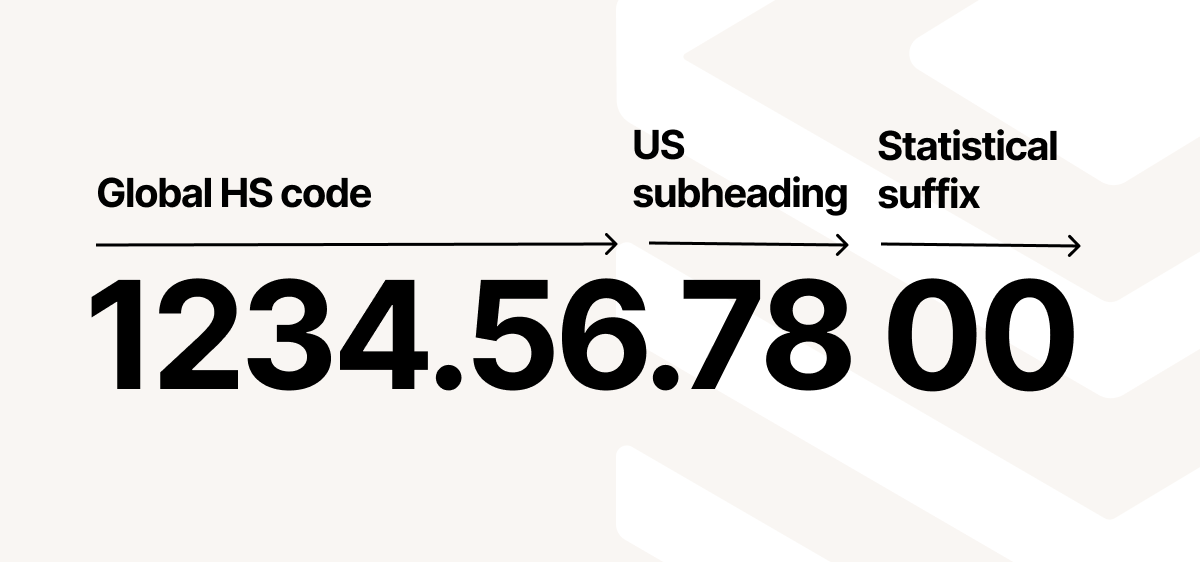
Harmonized Tariff Schedule codes (HTS codes) consist of 8 to 10 digits. There are more than 10,000 individual codes tied to specific items, divided across five different sections. The first six digits of an HTS number form an HS code. Any additional digits are assigned by the importing country to allow further classification.
A 10-digit HTS code, for example 8516.32.0090, breaks down as follows:
85 - Hoofdstuk
The first two digits of the code indicate the general category of the goods. In this case the digits represent electrical machinery and equipment.
8516 - Koptekst
The next two digits (16) give a more specific classification within the electrical machinery category. In this case 16 indicates that the goods relate to electrical transformers, converters and inductors.
8516.32 - Onderverdeling (HS-code)
The fifth and sixth digits (32) narrow the classification further to a specific product type within the transformers and inductors category. The digits might refer to variable or adjustable inductors, for example.
8516.0090 - Subrubriek (tariefregels)
The seventh and eighth digits, in this case 00, indicate the import duty. These two digits apply specifically to the United States.
8516.32.0090 - Statistical suffix
The remaining two digits indicate the most granular level of product classification and are used to collect trade data. In this case the numbers refer to a particular type or model of variable inductor. These digits also apply only to the United States.
It's important to know that the Harmonized Tariff Schedule is updated regularly to account for changes in technology, trade practices and the introduction of new products. In some cases countries can negotiate adjustments to HTS codes as part of an international trade agreement with the United States.
Are HTS and HS codes the same?
HTS codes contain an HS code, but an HTS code has additional digits to classify goods imported specifically into the United States in greater detail.
The key things to remember about HS codes are that they are:
- Six digits long
- Used worldwide for imports and exports
- Administered by the World Customs Organization (WCO)
HTS codes are:
- 8 to 10 digits long (with the first six digits forming an HS code)
- Applies only to imports into the United States
- Overseen by the US International Trade Commission
The main difference between HTS codes and HS codes is that HTS codes are US-specific and must be used by US importers. They are not recognised worldwide.
Why does it matter that e-commerce businesses use the right HTS code?
To ship goods successfully across US borders, every business has to provide the correct HS and HTS codes. For e-commerce businesses in particular, shipping goods internationally can be difficult because of unpredictable trade barriers and bureaucratic hurdles.
Customs sets very specific requirements you have to meet to clear shipments at the border, including complex tariff codes, taxes and duties, and international trade rules. Providing the wrong HTS code, or not maintaining HTS codes for your products at all, can have expensive consequences for e-commerce businesses, such as:
- Incorrect duties and tax rates: If the wrong HTS code is assigned to imported goods, you risk paying too much in duties and taxes. Customs authorities may also impose fines for the disruption, or even seize the goods.
- Shipping delays: An incorrect HTS code can cause shipments to be held by customs, bringing delays and extra costs.
- Order delivery delays: Using the wrong HTS code can mean delivery deadlines are missed, leading to unhappy customers and extra costs.
- Falling international revenue: Shipping delays and missed delivery deadlines caused by incorrect HTS codes can lead to a poor customer experience. That means fewer people may order from you if your reputation in international trade isn't strong.
- Customs audits of your business: If you regularly use HTS codes incorrectly, your business may face a customs audit, which can lead to higher fines and penalties.
How do I find my HTS code? How do you find the HTS code for product classification?
Suppliers sometimes give importers an HTS code. That's tricky, though, because if the assigned code is wrong, you as the importer — not the supplier — are liable for any problems arising from using the wrong code.
If you're not sure what the HTS code for your goods is, you can use Algemene Interpretatieregels (GRI) – as established by US Customs and Border Protection – to determine which HTS code best covers your product.
There are several tools you can use to look up the right HTS code, including the official Harmonized Tariff Schedule search tool.
Once you've determined the correct HTS codes for your products, you should double-check that the data is accurate. There are several ways to do this. You could look up the detailed descriptions of each tariff code, work through the United States Harmonized Tariff Schedule, or look for third-party interpretations of the standards.
Work with a 3PL for your international e-commerce operations
SendNet is an international expansion partner for e-commerce businesses, providing the support you need to meet customs requirements. That way you can trade internationally with peace of mind.
SendNet adds value to your international strategy by providing technologically advanced solutions and specialist e-commerce consultants who operate globally and support you 24/7.