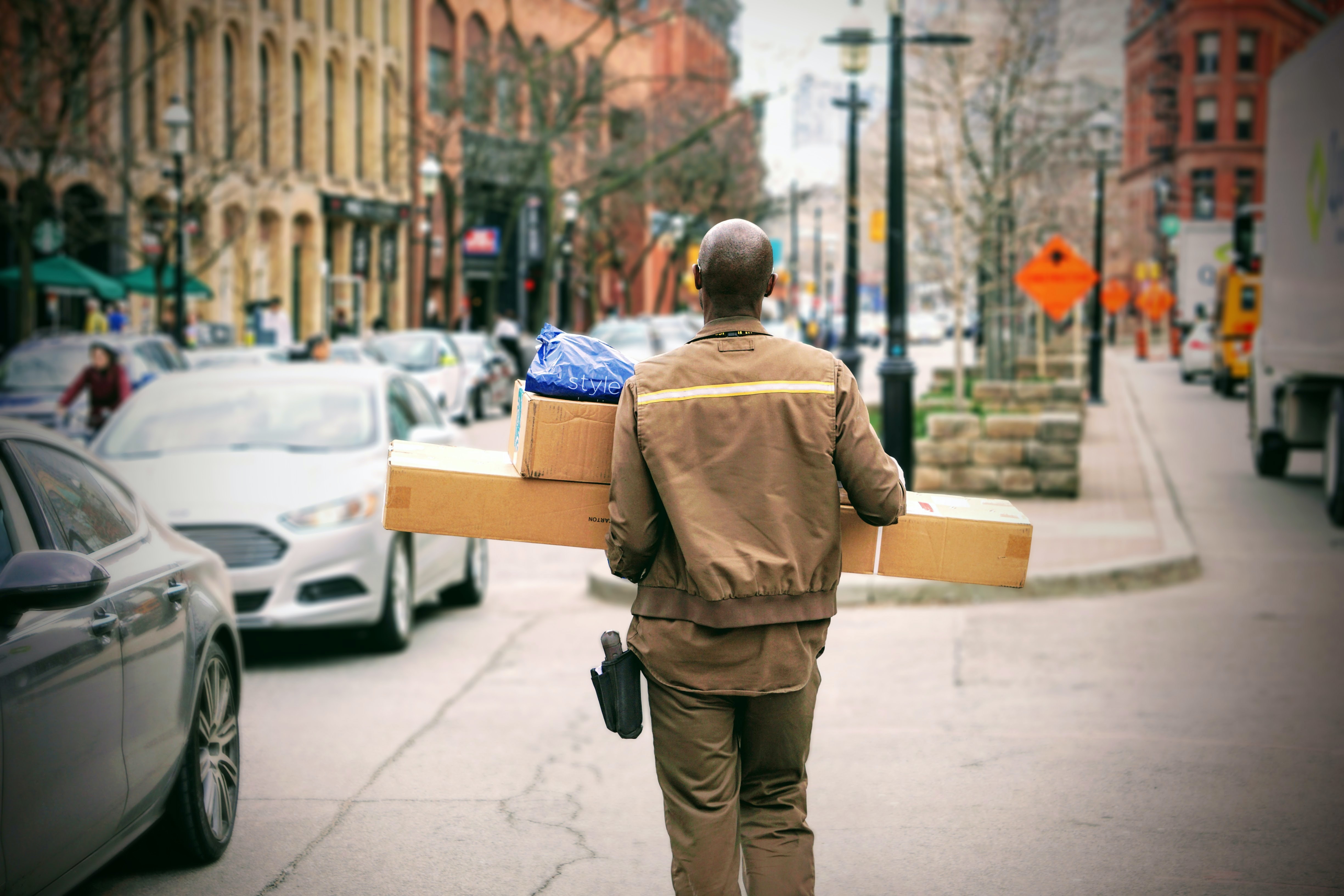
How to track a parcel: everything you need to know about e-commerce tracking
Read our guide and find out how tracking a parcel or shipment works.

Everyone who buys online tracks their parcel or looks up a shipment in the days after purchase. For that reason, delivering a positive tracking experience is an integral part of the sales process. But there's more to it than that.
Secondo uno studio psicologico apparso su USA Today, the obsession with tracking parcels and shipments doesn't stem only from the desire to receive the product bought, but from the profound impact that anticipating a future positive event has on people's day-to-day happiness.
Building a pleasant shipment tracking experience is therefore an important part of building long-term customer loyalty. In this article we've gathered everything you need to know about how shipment tracking works.
Cos’è il servizio di ricerca spedizioni
The shipment lookup service lets your customers track every parcel and follow their orders all the way through to final delivery.
This lets them relax, enjoy the wait and organise themselves properly to receive the parcel, reducing failed deliveries and increasing satisfaction among those buying from your store.
Shipment tracking also lets you spot delivery problems promptly and communicate effectively with customers to build trust and deliver a positive experience even when something goes wrong.
How to track your parcel
When it comes to tracking a parcel there are at least three different approaches you can offer your customers. In this section we'll look at the advantages and disadvantages of each, and how parcel tracking affects the buying experience.
Tracking integrated with your store
Showing tracking data directly in the order summary (as Amazon does) lets you give customers immediate feedback, delivering excellent satisfaction and total control over their parcel tracking experience. But it's also the option that requires the most work on your part.
To follow the order directly on your site, each customer has to register a personal account; if most of your sales happen through guest checkout it may not be worth it. That said, offering integrated shipment lookup could be an incentive to reduce guest purchases and increase registered customers (which gives you useful post-sale data and encourages customers to return to your store).
You do have to bear in mind that once shipment tracking is integrated into your site, the responsibility for dealing with carriers to resolve any shipping or delivery problems falls to you. And that means higher customer support costs (on top of the development costs of integrating tracking).
Tracking corriere
The simplest and cheapest way to let your customers track a parcel is to use a reliable carrier, provide the tracking number when the order is completed and let customers follow their parcels directly on the carrier's site.
This eliminates all management costs, but customers will attribute much of their satisfaction to the carrier's work rather than your store, making long-term loyalty harder to build.
Fortunately there's another option that delivers all the benefits of direct shipment tracking without any of the drawbacks.
Tracking tramite terze parti
If following every shipment directly is unthinkable for your organisation, but you don't want to leave your customers at the mercy of carriers, turning to a logistics professional could be the solution for you.
By entrusting the management of your shipments to an external partner, you can draw on a specialist's experience and benefit from extra services designed to maximise your customers' satisfaction (such as a dedicated app for tracking their shipments).
And just as with a service managed directly through your own site, a better tracking experience is an excellent incentive for turning every sale into a genuine customer you can (finally) bring into your sales funnel.
How to track an international shipment
As shown in this articolo sulle spedizioni tramite container, the annual volume of international shipments has increased 18-fold over the past 40 years.
The ever-growing volume of goods moved daily around the globe has made buying from one country to another convenient, letting e-commerce businesses worldwide widen their horizons — while introducing logistical complications for their operators.
Tracking an international shipment is relatively simple if it's sent through the big specialist carriers (such as DHL, FedEx and UPS), but the shipping costs these companies charge are generally very high.
Offering customers a cheap shipping option while guaranteeing a reliable tracking service isn't quite so simple.
The cheapest shipments are usually handled by consortia of local carriers working together to optimise space and fuel and drive down costs. The problem is that these consortia often struggle to provide up-to-date tracking information, making orders hard to follow. So what can you do?
Once again, using an external partner is the most cost-effective solution. There are both tracking companies able to follow parcels across multiple carriers and logistics companies that, thanks to direct partnerships with consortia (and the large volumes of goods they move daily), can guarantee effective shipment tracking even along convoluted routes.
With a week or two of waiting before delivery, tracking an international parcel properly is essential to making sure customers want to repeat the experience and buy again.
What is a tracking number?
A tracking number is a unique code generated by the carrier, printed on a label and assigned to each parcel. The label is scanned during transport and sorting, creating a history of its movements and making it possible to track the parcel. Each carrier generates and reads its own codes, so a DHL code can only be found and followed on DHL's site.
As mentioned, however, there are international tracking companies (such as 17track) able to read and follow tracking numbers from different carriers worldwide.
For international shipments handled through the national postal service, international tracking codes are generated that can be read in both countries. If a parcel is sent from the United States to Italy through the national postal system, for example, the tracking code from the US postal system can also be read and followed on the Poste Italiane site.
Parcel tracking status
The tracking number gives access to the history of the parcel's movements. Each stage is generally assigned a label indicating the parcel's progress. In this section we've gathered some of the most common ones:
Spedizione registrata / Pacco in lavorazione
It means the sender has handed the parcel to the carrier, which is preparing it for dispatch.
In transito
When a parcel is in transit it means it has left the sender's site and is travelling through sorting centres towards the depot that will make the final delivery.
Depending on the distance to be covered, a parcel in transit may pass through one or more sorting centres.
Arrivato nella sede locale
When a parcel is shown as having arrived at the local depot, it means it has reached the site where it will be prepared for delivery.
In consegna
The parcel is currently on board the vehicle making the final delivery to the recipient.
Altri stati di spedizione
Depending on the carrier used and the type of goods handled, there may be specific shipping statuses that could confuse or alarm buyers unfamiliar with shipping.
Adding a key to your site explaining the main progress statuses of the carriers you use most can be a good way to reassure impatient customers and reduce your customer service workload.
Parcel tracking and scams
Parcel tracking is a fantastic tool that has allowed e-commerce to grow and develop enormously, but it isn't free of scams. One of the most common is the mass sending of text messages reporting problems with a parcel held at customs and inviting the recipient to click a link to supply the missing details (usually card details) to clear the parcel.
For that reason it's important to communicate your tracking process very clearly to your customers and warn them against any communication that falls outside it.
Not only is it a way to avoid potential problems, but every extra bit of care contributes to a pleasant buying experience and builds customer loyalty.
Track your shipments with SendNet
Having a partner handle logistics on your behalf not only gives you access to a wide range of dedicated services (including shipment tracking) but also lets you devote all your energy and resources to the critical stages of selling and refining your products.
That way you can focus entirely on your business without having to think about how to manage all those parcels.
SendNet can handle every aspect of your D2C e-commerce logistics and prove to be the winning choice.
Ti interessa? Get in touch with us and request a quote right away.